Cody Murray’s death
Dead ShotCody Murray’s death transforms a seemingly private athlete’s tragedy into the central mystery behind Statenville’s public prosperity. Statenville’s greatest football star in fifty years dies after a drug-related bodily crisis that no one wants to describe plainly, and the implausible appearance of his death becomes the first sign that the town’s admiration for athletic success is concealing a far more dangerous system.
Athlete, Celebrity, and Ambition
Cody is introduced as a restless, intensely physical young athlete whose identity is inseparable from motion. Even while reading his favorite sports magazine on a Sunday afternoon, he shifts in his recliner; stillness does not belong to him on the field or off it. His ambition reaches beyond local achievement. Though he is a six-foot scrambling quarterback on a rural Idaho eight-man team, he has already earned several major scholarship offers and imagines appearing on the cover of a national sports magazine. The fantasy is unlikely, but his success has taught him to treat the unlikely as attainable.
That ambition shapes his relationship with drugs. Cody knows steroids are dangerous and difficult to obtain in a rural town in southern Idaho, so he tells himself that he is not pursuing that kind of enhancement. Instead, he wants only a small boost while working out, something he can fold into the discipline that he considers genuinely his own. The distinction allows him to preserve the idea that his athletic record is still his work. What begins as instrumental use, justified as a means to train harder, has recently begun to slide toward pleasure, making the boundary he relies on increasingly unstable.
The Bodily Crisis
The death begins with an itch above Cody’s elbow. At first, he treats it as an ordinary irritation and expects a single scratch to make it disappear. Instead, red welts spread across his arms, chest, and back, and every attempt to obtain relief intensifies the reaction. In less than a minute, the muscular body that represents his athletic promise is covered by the symptoms overwhelming it.
Cody responds through movement, the same physical urgency that defines his athletic identity. He jumps from the couch, staggers through the back door, leaps from the deck, and runs toward an aspen tree twenty yards away. Rational thought gives way to immediate bodily necessity. He drives his fingernails into his chest, presses his back against the tree, and rubs upward from a crouch, trying to turn the landscape into an instrument of relief. When that fails, he searches for another tree, considers removing his shirt, then falls onto the grass and rolls while scratching both forearms.
The scene reaches its terrible reversal when the itching stops. Cody’s body is covered in bleeding welts, and the apparent relief is not recovery but death: after one final spasmodic convulsion, his breathing ceases. Blood streaks his chest in patterns compared to the discarded carcass of a sadistic occult ritual. The ending converts the body that had promised strength, speed, and scholarship opportunities into evidence of a catastrophe that athletic prestige cannot explain away.
A Death the Town Cannot Accept
The death is shocking not only because of its violence but because of the contradiction it creates. Cody Murray is Statenville’s greatest football star in fifty years, yet he has apparently scratched himself to death. The town’s preferred image of him—as an exceptional athlete moving toward college opportunity—cannot accommodate the grotesque physical facts of his end. His death therefore creates an immediate pressure to reinterpret, soften, or conceal what happened.
Later testimony shows that Cody’s drug use was not an unknown private secret. Mike Miller recalls warning Cody’s father after practice that Cody might be using drugs. His father laughed and replied that if the drug helped Cody get ahead, he supported it. The response reveals a family and community value system in which athletic advancement outweighs concern about the method or its consequences. Cody’s death is thus connected to a culture that does not merely fail to notice danger; it can recognize danger and still treat it as acceptable when success appears to justify it.
Miller also explains why methamphetamine could seem useful to an athlete. He has heard that it gives users energy, allowing someone who wants to escape Statenville through sports to work out longer. Longer workouts promise greater strength and physical performance, while college coaches, in Miller’s cynical account, may care less about academic ability than about how impressive an athlete looks when arriving. The logic pushes ambitious students toward training rather than study and makes drug use appear compatible with the town’s athletic dream. Cody’s death exposes the lethal consequence of that bargain.
Investigation and Expanding Consequences
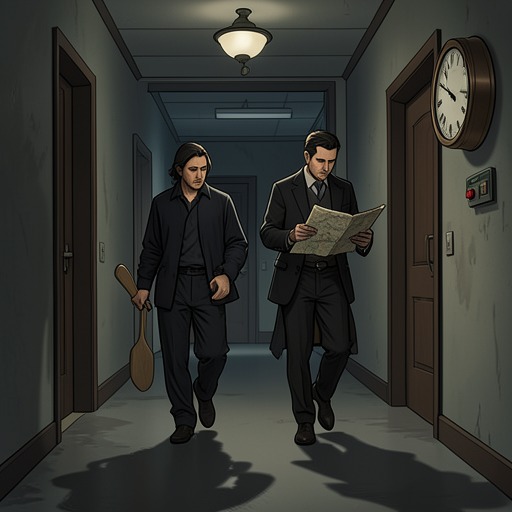
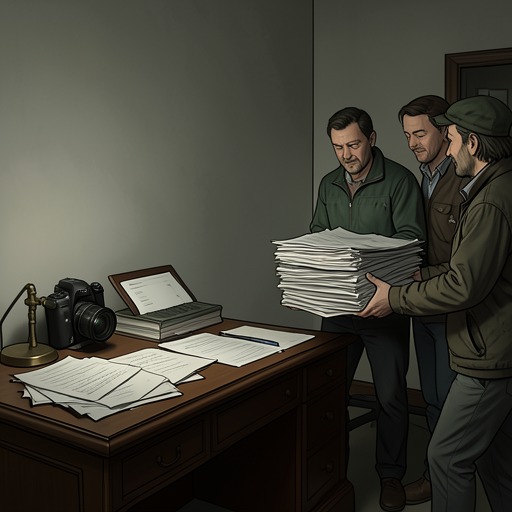
Cody’s death becomes the point from which Cal Murphy and Kelly Mendoza begin to question Statenville’s account of its young athletes’ deaths. The testimony surrounding Cody places his case within a broader drug environment rather than treating it as an isolated medical freak event. The information also helps explain why Cal’s reporting becomes dangerous: a story about one dead football star threatens parents, coaches, and the local interests invested in presenting athletic success as proof that the town is healthy.
The consequences reach beyond the original death. Cal’s pursuit of the story eventually leads him toward visible drugs, dead people, and the dangerous activities associated with Cloverdale Industries. At one point, while fleeing for their lives on a Yamaha VMAX motorcycle, Cal is sustained by the evidence he has seen: he knows that people are dead and that drugs are visible, even if he doubts that what he possesses would yet withstand a court of law. Cody’s death therefore remains present as the empirical and moral beginning of the investigation, even as the inquiry develops into a confrontation involving kidnapping, armed pursuit, and institutional secrecy.
The danger becomes physical for Cal when he is shot in the right arm during a gunfight and Kelly crawls toward him, urging him toward a nearby dock. The later violence does not belong to Cody’s death itself, but it demonstrates the expanding cost of the truth first opened by his case. Cody’s body is the initial evidence; Cal and Kelly’s endangered bodies become a later consequence of refusing to let that evidence disappear.
Narrative Significance
Cody Murray’s death establishes the novel’s governing contrast between appearance and reality. The admired athlete embodies Statenville’s promise of upward mobility, discipline, and local pride, while the manner of his death reveals dependence on chemical enhancement, permissive adults, and a willingness to measure human worth by outward performance. His athletic body is both the object of communal admiration and the site where the hidden cost becomes visible.
The episode also makes bodily experience more authoritative than the explanations available to the community. Cody begins with a rationalized account of drug use and an expectation that a minor itch will pass; the body then overwhelms those interpretations through welts, bleeding, frantic movement, and the final loss of breath. His death is not presented as a clean lesson learned in time. It is a failure of recognition in which ambition, pleasure, and social approval continue until the body can no longer sustain them.
Because no one would readily believe that Statenville’s most celebrated football player scratched himself to death, the event carries the force of a suppressed fact. It is both a death and an accusation: against the culture that rewards visible athletic power, against the adults who accept chemical assistance when it produces advancement, and against the town that has reasons to prefer an impossible explanation to the truth of what happened.